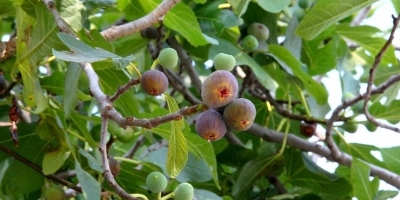
Fig leaves – traditional uses, modern research and a lovely recipe
Most of us know the fig tree, Ficus carica, for its fruit. We wait for the figs to soften, eat them fresh from the tree if we’re lucky enough to have one, dry them, cook with them or turn them into preserves. The leaves tend to get rather less attention, yet fig leaves have their own long history of use, both as food and medicine, and they’re much more interesting than they first appear!
The common fig is native to western Asia and the eastern Mediterranean and has been cultivated by humans for thousands of years. Different parts of the tree have been used traditionally, including the fruit, leaves, roots and latex. The leaves in particular have been used for digestive complaints such as indigestion, colic and loss of appetite, as well as inflammatory, respiratory and metabolic problems.
Modern research has started to explore some of those older uses. Fig leaves contain a broad mixture of plant compounds, including phenolic acids, flavonoids, organic acids and coumarins such as psoralen and bergapten. Experimental studies have reported antioxidant, anti-inflammatory, antimicrobial and glucose-lowering activity, although much of this work is still laboratory or animal based rather than good-quality human clinical research.
The metabolic side is particularly interesting because fig leaf has a traditional association with blood sugar regulation. There has been some human research too, but it remains very limited, so I wouldn’t describe fig leaf as a proven treatment for diabetes. It’s one of those plants where the traditional use, phytochemistry and early research line up intriguingly, while still leaving us with plenty more to learn.
And then there’s the completely different pleasure of using the leaves in the kitchen. When a fig leaf is warmed, it develops a wonderful aroma that can be surprisingly coconutty and vanilla-like, sometimes with an almond or slightly grassy note underneath. I’ve used the leaves to flavour milk before and have mentioned this preparation to my students because it’s such a lovely way of getting to know the plant through smell and taste.
You can use fig-leaf-infused milk in rice pudding, custard, panna cotta or ice cream, or simply drink it warm.
Fig-leaf milk
For a simple batch you’ll need:
- 1 large, healthy fig leaf
- 500 ml milk
- A little honey if you’d like it sweeter
Method:
- Wash the leaf well and remove the thick stalk.
- Add the leaf to the milk in a saucepan and warm everything gently. You don’t need to boil it hard. Once the milk is hot, take it off the heat, cover and leave it to infuse for around 15 to 20 minutes.
- Remove the leaf, strain the milk and taste it. You can leave it a little longer if you’d like a stronger flavour.
- Drink it warm with a little honey, or use the infused milk as the base for a pudding, custard or ice cream. It’s a very simple preparation, but the transformation in the aroma is lovely. The fresh green leaf suddenly becomes something much richer and more fragrant.
Medicinally, fig leaves have traditionally been prepared in several ways, including teas and decoctions, while tinctures are also used by some herbalists. These preparations won’t necessarily extract exactly the same constituents, which is one reason it’s useful to pay attention not only to the plant but to how it has been prepared.
Safety
There is, however, one particular thing to know before enthusiastically harvesting a basketful of fresh fig leaves. When you break a fresh leaf or stem, the plant releases a white milky latex. Fig latex contains photoreactive compounds, including furanocoumarins, which can make the skin unusually sensitive to ultraviolet light. If enough fresh sap gets onto the skin and that area is then exposed to strong sunlight, it can cause phytophotodermatitis, with redness, burning and sometimes blistering. Cases caused by Ficus carica are well documented.
In practice, I’d wash any sap from the skin promptly, avoid touching the eyes, and wear gloves if I were cutting or processing a lot of fresh leaves, particularly in strong summer sunshine. That safety point doesn’t make fig leaf something to avoid. It’s simply part of knowing the plant properly.
And perhaps that’s what I like most about fig leaves. They’re easy to overlook because the fruit gets all the attention, yet the leaves have their own flavour, history, traditional medicine uses and surprisingly complex chemistry. Even with plants we think we know, there’s nearly always another part worth looking at 😉
Want to learn herbal medicine in a grounded, practical way?
The Crafty Herbalist Academy is my online herbal medicine membership and foundation course, for people who want to learn herbs properly, at their own pace, with real guidance and support. It brings together tradition, science, folklore, remedy-making, seasonal practice and clinical herbal thinking, without rushing you or overwhelming you.
You can have a closer look at The Crafty Herbalist Academy here.
If the doors are closed at the moment, you can join the waiting list and I’ll let you know when the next intake opens.