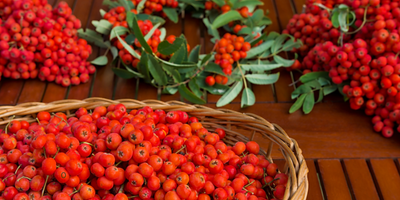
As autumn sweeps in with its cooler winds and golden light, the rowan tree (Sorbus aucuparia) stands out against the landscape, its vibrant red berries hanging in heavy clusters. Often referred to as the “Mountain Ash,” rowan has a rich history woven with folklore, magic, and practical uses that span centuries. From medicinal remedies to culinary delights, this is a tree steeped in tradition and wonder.
Rowan identification and foraging tips
If you’re keen to get outside and start foraging, identifying rowan is relatively straightforward once you know what to look for. Here’s a guide to ensure you’re gathering the right berries.
- Rowan trees are relatively small, often no more than 15 meters tall. They tend to have a delicate, airy shape with graceful branches reaching outward.
- The leaves are compound, made up of 5-8 pairs of leaflets and a single terminal leaflet. These leaflets have a serrated edge, and in autumn, they turn a stunning orange or red.
- In the spring, rowan trees blossom with creamy white flowers that give off a strong scent. By late summer to early autumn, these flowers transform into dense clusters of small, bright red berries.
- Rowan is widely spread across the UK and Europe. You’ll often find it growing in open woodlands, moorlands, hillsides, and even in urban environments. In fact, in Scotland, rowan trees are commonly planted in gardens and by doorways as a protective charm!
- The berries are best harvested in late summer to early autumn, ideally after the first frost. If frost hasn’t yet arrived, you can mimic this by freezing the berries overnight, which helps reduce their natural bitterness.
Culinary uses
Though raw rowan berries are quite bitter and astringent, they transform beautifully when cooked. Rowan berries are high in vitamin C and have been used traditionally in preserves and jellies.
Their tart flavour pairs well with rich meats like venison or lamb, and they can add a distinctive sharpness to stews, sauces, or chutneys. When sweetened in jellies or jams, rowan berries make an excellent accompaniment to cheese boards or spread on warm toast for a seasonal treat.
One of the most traditional ways to preserve the berry’s unique flavour is in Rowan Jelly (recipe below), but they are also sometimes used to make wine or infused into spirits for a bitter, herbal liqueur.
Medicinal properties
Rowan berries have been used in folk medicine for centuries, particularly in Northern Europe. Though not as commonly found in modern herbal medicine, they offer some notable health benefits:
- Digestive health: Rowan berries have astringent properties, which help tone tissues and can be beneficial for treating diarrhoea and other digestive issues. The high tannin content may also support the digestive system by reducing inflammation.
- Vitamin C: Historically, rowan berries were consumed as a source of vitamin C, helping to ward off scurvy, particularly in Northern Europe where citrus fruits were less accessible.
- Anti-inflammatory: The berries are thought to contain compounds that help reduce inflammation, making them useful for treating conditions like arthritis in traditional remedies.
- Mild laxative: In small quantities, rowan berries may act as a mild laxative, aiding in constipation relief when consumed in syrups or jellies.
- Respiratory support: Rowan was sometimes used to make cough syrups or throat lozenges due to its ability to soothe the throat and support respiratory health, especially during the colder months when coughs and colds were prevalent.
Folklore and Magic
Few trees are as steeped in folklore as the rowan. Known as the “Witch Tree” or the “Tree of Life” in some cultures, the rowan was believed to possess protective powers against evil spirits, enchantments, and even witches.
- In Celtic traditions, rowan trees were often planted near homes, churches, and barns to ward off bad luck and protect the household from malevolent forces. Crosses made of rowan wood were often carried or hung in homes as protective talismans.
- Rowan trees were considered sacred in many cultures, thought to bridge the gap between the earthly realm and the spirit world. In Irish folklore, the tree was believed to offer protection against fairy mischief, and it was often used in rituals to ensure safe passage during spiritual journeys.
- Rowan berries have been used in magical practices, particularly in divination. The five-pointed star that appears on the underside of the berries when cut in half was seen as a symbol of protection. This star shape is why rowan is associated with guarding against spells and bad luck.
- In Norse mythology, the rowan was called the “Tree of Thor,” as it was believed to have saved the god Thor from drowning in a raging river. Meanwhile, in ancient Scottish customs, rowan wood was burned on Beltane fires to protect against evil spirits and bring good fortune for the year ahead.
Foraging responsibly
When foraging rowan, always ensure that you leave enough berries for wildlife. Rowan berries are a favourite for birds, especially thrushes and waxwings, who rely on them during the colder months. Be mindful of your foraging location, ensuring it’s free from pollution and pesticides, especially if you’re collecting berries from roadside trees or urban areas.
Rowan Jelly Recipe
Now that you’ve foraged your rowan berries, it’s time to transform them into a delicious, versatile jelly that captures the very essence of autumn. This recipe balances the tartness of the berries with the sweetness of apples and sugar, creating a jelly that pairs beautifully with both sweet and savoury dishes.
Ingredients:
- 1 kg rowan berries (harvested after the first frost, or freeze overnight)
- 1 kg cooking apples (for natural pectin)
- Water (just enough to cover)
- 500g sugar per 500ml juice (measured after straining)
- Lemon juice (optional, to taste)
Method:
- Start by rinsing your rowan berries thoroughly, removing any stems or leaves. Wash and roughly chop the apples, leaving the skin on for extra pectin.
- Place the rowan berries and apples into a large pot and cover with just enough water to submerge them. Bring the mixture to a boil, then reduce the heat and simmer for 30-40 minutes until the fruit has softened and released its juices.
- Pour the mixture through a jelly bag or muslin cloth into a large bowl, and allow it to drip overnight. Be patient—pressing the bag will cloud your jelly.
- Measure the juice you’ve collected and for every 500ml, add 500g of sugar. Stir the mixture over low heat until the sugar dissolves. If you like, you can add a little lemon juice for extra zing.
- Increase the heat and bring the mixture to a rolling boil. Let it cook rapidly until it reaches setting point (this usually takes about 10-15 minutes). To test, drop a spoonful onto a cold plate—if it wrinkles when pushed, it’s ready!
- Once your jelly has reached the right consistency, pour it into sterilised jars and seal. Store your rowan jelly in a cool, dark place, where it will keep for months.
Rowan jelly is the perfect accompaniment to rich, autumnal dishes like game meats, hearty stews, or a simple cheese platter. It’s a taste of the wild and a beautiful way to preserve the magic of the season.